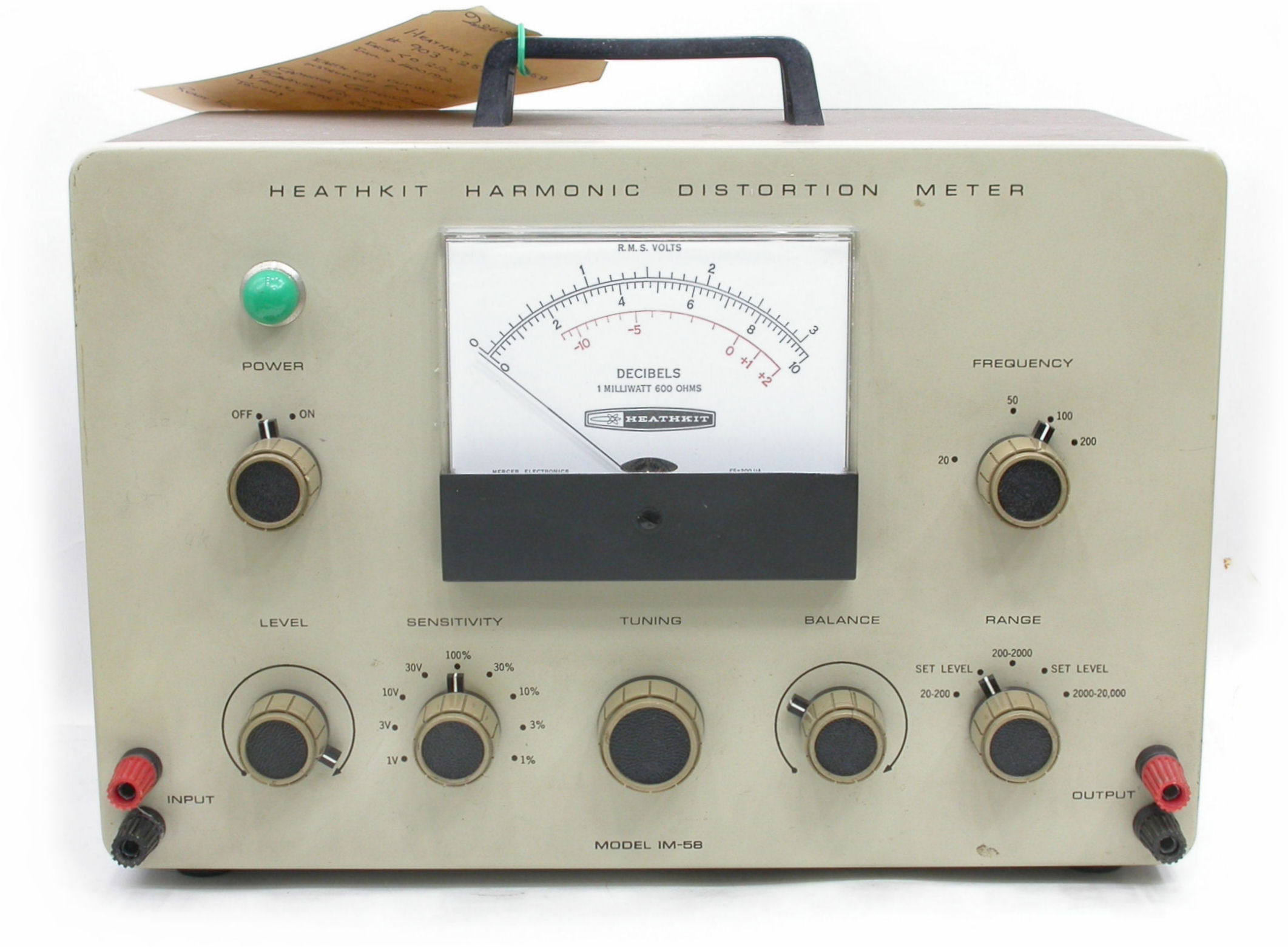
The Heathkit IM-58 is a classic piece of vintage test equipment, a harmonic distortion meter that was popular among hobbyists and technicians in the mid-20th century for analyzing audio equipment.
How It Works: The IM-58 operates on the fundamental suppression (notch filter) principle. It uses a tunable notch filter to remove the test tone's fundamental frequency, and the remaining signal is measured as the total harmonic distortion (THD).
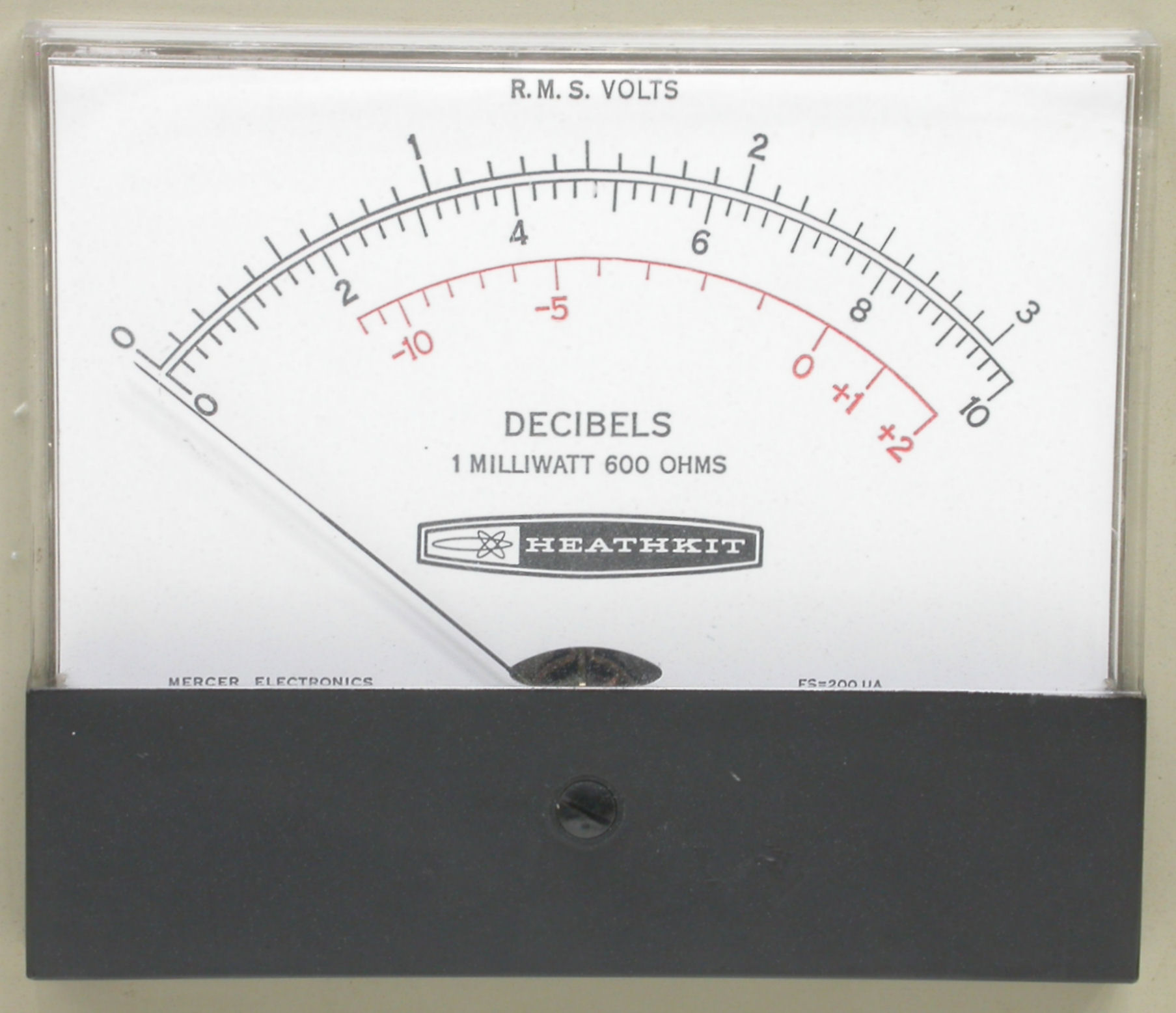
Using the Meter: The measurement process requires an external, low-distortion audio generator. You feed a test tone into your device under test, connect the output to the IM-58's INPUT, and set the LEVEL for a full-scale reading. Then, you tune the RANGE and TUNING controls to null out the test frequency, and read the distortion percentage on the meter.
Restoration Reality: The IM-58 is a "project" piece. Its age means that components, especially electrolytic capacitors and carbon-composition resistors, drift out of spec or fail. A common restoration path involves recapping (replacing capacitors) and checking/replacing out-of-tolerance resistors. High-quality, precision resistors are often required to restore its accuracy.
Calibration: Finding a complete, correct manual is a common challenge for owners. Restoration logs frequently mention a known typo in the original voltmeter calibration procedure (specifying peak-to-peak instead of RMS voltage).
Value and Context: The IM-58 is more of a collector's item and a nostalgic project than a precise, modern measurement tool. Its value on the used market is modest, often selling for under $50, and its main appeal lies in the restoration process and its vintage aesthetic. Modern digital analyzers are far more accurate and easier to use.
- Documentation: View the full manual (PDF) · Additional IM-58 resources
- Calibration: The calibration procedure is notably detailed and requires additional test equipment like a frequency counter and an AC VTVM.
- Parts: Tube-based design means replacement tubes (12AX7, 12AT7, 0A2) are still obtainable through vintage parts suppliers.